

1 Samuel 6.1-11; 1 Chronicles 13.1-14
When we touch God's Presence
A young man grew up literally in the shadow of Israel's most sacred object... until one instant of good intention cost him his life. The story of Uzzah and the Ark of the Covenant is an uncomfortable warning about what happens when we grow so used to God's glory that we stop fearing it. What do a king who wanted to please everyone, a guardian who trusted his own good intentions, and us today have in common? This study connects the Ark to Jesus himself, and leaves you with a question that isn't easy to shake: have we ever touched God's presence when we shouldn't have?
Published on July 2, 2026
When We Touch God’s Presence, What Happens?
We are transformed! We become drunk with the Spirit! I feel a fire burning inside me! I can smell the fragrance of Jesus’ hair!
You’ve surely heard answers like these before… I’ve heard several myself, and some even more “extravagant.” With the growth of the gospel, the explosion of gospel media, and the profitable Christian consumer market, much has been said about worship, about investing in that area. Megachurches have contributed significantly through mega-conferences, mega-gatherings, and mega-communion with God, with a powerful mega-intimacy. But what does the Word say about this eccentric, at times irreverent, closeness that has been seen in our churches, both in Brazil and beyond?
I had the privilege of growing up in a Christian home, and from a very young age I knew and studied the Word of God. A small character, with a name of just five letters, intrigued me deeply: UZZAH. To understand his context, let’s go back a bit in history:
God had chosen the Israelites as a holy people, through the patriarch Abraham (Genesis 12:1-3). Their descendants lived as slaves in Egypt, and were set free (Exodus 6:6-7). God dwelt among them and gave them standards of holiness and integrity, setting them apart from the other peoples of the earth (Leviticus 20:26). He gave them a land to live in and worship Him there (Joshua 21:43-44). God placed a king over them, and they became established as a nation (1 Samuel 8:10-17). While they still lived as nomads in the Sinai desert, dwelling in tents, the almighty God decided to dwell in a tent as well, called the TABERNACLE. This tent had many furnishings and utensils, but there was one in particular:
The Ark of the Covenant
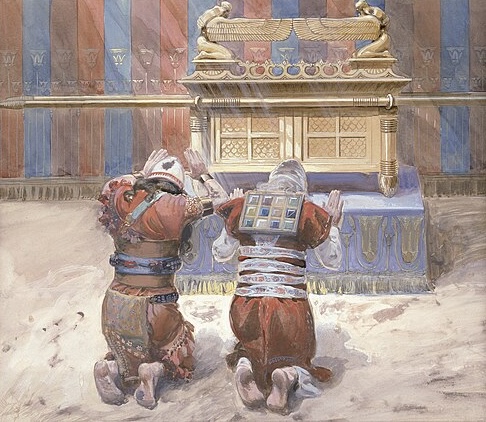
This artifact was the most sacred of all; it represented the presence of God and, as its very name indicates, God’s covenant with His people. It was made of acacia wood, covered with gold inside and out. Its lid was called the MERCY SEAT, carved with the figures of two cherubim facing each other, covering their faces with their wings, touching at their tips. There the high priest poured out the blood of a spotless lamb once a year, during the feast called “Yom Kippur,” the day of atonement for the sin of the whole nation. The ark always went ahead of the people in their journeys and battles, showing that wherever they went, the presence of God went first, and their enemies knew that they were facing not simply a people, but the LORD of hosts. Inside the ark were three objects:
THE TABLETS OF THE LAW: written by God’s own finger, they were the summary of the entire law, the essence of God’s covenant with His people. The most basic standards guiding Israel on the path of holiness, so that Jehovah would be revealed to all nations.
AARON’S ROD: the same rod that turned into a serpent before Pharaoh (Exodus 7:8-13), and that blossomed and produced almonds after Korah’s rebellion (Numbers 16 and 17). In the time of the patriarchs, the staff represented a person’s identity. It showed the deliverance of the chosen people and the shame of Egypt. It also announced Aaron’s election as high priest, silencing the rebellions in the desert and showing a fruitful ministry.
A JAR OF MANNA: the jar held the daily portion of manna per person, roughly 3.6 liters. The manna represented God’s provision, which allows us to go through hardship yet never abandons us, sustaining us with a faithful hand. The provision was daily, meaning that each day the people had to place the same trust in God — that is, they could not store it up for the next day.
The ark went ahead of the nation the entire time they were in the desert, in their battles to possess the promised land, in feasts of celebration and worship, and on other occasions. Near the end of the period of the Judges, it was imprudently taken into battle against the Philistines. The people were living in sin and ungodliness, and foolishly believed that simply having the symbol of God’s presence with them would make them victorious over their enemies. Their foolishness brought great mourning, for in that battle thirty thousand Israelites died, along with their priests and leaders, and the ark was captured by the enemy (1 Samuel 4-6). God’s hand weighed heavily on the Philistines, who were struck with plagues, illnesses, tumors, and every kind of curse. They returned the ark on a cart pulled by oxen, which stopped in the city of Beth Shemesh. It was then sent to Kiriath Jearim, where it stayed in the house of Abinadab, and his son Eleazar was consecrated to care for it.
Here we arrive at the key point of the story. 1 Chronicles 13 tells us that Abinadab had two more sons besides Eleazar: Uzzah and Ahio. There is no further mention of Abinadab or Eleazar, which leads us to believe they had already died. The sons mentioned could be grandsons, or even great-grandsons, since in the Old Testament the word HOUSE was used to indicate family, and the word SON to indicate a descendant. Given that the ark was brought to Abinadab’s house during Samuel’s ministry, and remained there through all of Saul’s reign and into the beginning of David’s reign, it likely stayed there somewhere between 40 and 90 years.
Getting fully into the story — could you imagine having the nation’s holiest object sitting in your living room? The ark, representing the presence of God, like a piece of furniture you live with every day? I picture Uzzah growing up beside the ark, seeing “God’s presence” daily, growing accustomed to its glory… We believe his family belonged to a priestly line, one that knew the laws well and how the ark should properly be handled. They cared for it well throughout all those years. What danger could there be in growing accustomed to the glory of God?
David’s Mistake
When David was already reigning in Jerusalem, a desire awoke in his heart to bring the ark to Jerusalem, the capital of the kingdom — an EXCELLENT IDEA! The Word tells us that David consulted the captains of thousands and of hundreds, and consulted the whole assembly, and it seemed good to them to bring up the ark of the LORD. The king had a brilliant idea, and, what’s more, that idea pleased the whole people. Everyone was satisfied with the idea — but how did God feel about it?
David gathered the whole people to celebrate; after all, they had good reason to. He placed the ark on a new cart, pulled by oxen, just as the Philistines had done. They sang and danced, and Uzzah and Ahio, sons of Abinadab, who had grown up with the ark, were guiding the cart.
As king, David had the duty to lead the people in God’s way and to display them before all nations as a people chosen by God, so that all peoples would see the glory of Jehovah. David did not consult the Lord; instead, he consulted the leaders of the people and the assembly, and managed to please everyone. A great danger lurks whenever we begin wanting to please people more than we want to please God — we put ourselves at risk, and we put at risk the lives of those we love. Another mistake David made was doing things the way the Philistines had done them. The fact that something happened a certain way in the past doesn’t mean it has to happen the same way again. David knew the law and knew the ark could not be touched — it had to be carried on the shoulders of the priests, from the clan of Kohath. He never consulted God about whether he should do it, when he should do it, or how he should do it. A mistake that came at a high cost!
Uzzah’s Transgression
It’s striking that Uzzah and his brother were the ones guiding the cart. Priests who knew the Word should have known that the ark could only be carried on the shoulders. Perhaps seduced by the honor of leading the great “ark of the covenant” before the whole nation, Uzzah let himself break the very first principle he knew so clearly. Or perhaps, gripped by fear of the king, in his so determined plan to move the ark, he was afraid to confront him with the one, absolute truth. Whatever the circumstances, they show that Uzzah and his brother set aside their principles, choosing a “nice” path instead of God’s path. They failed to take a stand, opening the door to their own downfall by ignoring the most basic spiritual laws.
By what might seem a coincidence — or a perfect opportunity to teach the king who would come to be called “a man after God’s own heart” — at the threshing floor of Nacon the oxen pulling the cart stumbled, and the magnificent ark was about to fall to the ground, “shamefully profaned.” As a good guide, and as someone who loved the ark — after all, he had likely grown up with it his whole life — Uzzah reached out his hand to steady it.
This is the part that confronted me the most. Uzzah had the good intention of reaching out his hand, of “defending God’s presence”… and because of that, God became angry with him, struck him, and he died?
King David was greatly displeased, perhaps feeling responsible for the death of such a devoted “guardian.” The move was interrupted, and the ark was taken to the house of Obed-Edom. David feared the Lord, and reflected on the matter.
There we see Uzzah’s second transgression. He too knew that the ark could not be touched under any circumstance (Numbers 4). That’s why the priests carried it on their shoulders, using poles that passed through rings on its four corners, so they would not touch it and die. He had already been warned, for he knew the Word — but he did not practice it. Regardless of his good intention, he transgressed a commandment of God, and was punished for it. Perhaps he had grown so accustomed to “living with God’s presence” that he no longer feared touching it improperly, and he lost his life for it. I see such a profound lesson here: Uzzah wanted to defend God with his own hands; but over the years I’ve learned that God does not need defenders — He simply is, and no one can change Him. Nothing I can do or fail to do, within my human limitation, can affect the supremacy of His person.
Looking at this intriguing story, I can see several translations of it for today…
The ark of the covenant was a shadow of what would come to be fulfilled in Jesus. The book of Hebrews sheds much light on this. The acacia wood, native to the desert, the only wood that does not decay in that arid climate, speaks of Jesus’ death, and His body, which was hung on a piece of wood but did not suffer decay, for He rose again. The gold speaks of God’s divine nature and majesty — fully man, yet fully God. The manna, bread that came down from heaven to feed, satisfy, and save from death; Jesus Himself describes Himself as the living Bread that came down from heaven, who came to feed us, satisfy us, and save us. The rod of the first priest speaks of Jesus, who became sin for us and carried all our uncleanness once and for all, and who was the eternal King and Priest (Numbers 18:1). It also shows a rod that had died but came back to life supernaturally. The tablets of the law represent the whole essence of the first covenant, the law that showed humanity its need for help, for a savior. Inside was the law, the first covenant, and above it, on the mercy seat, the blood of the spotless lamb was poured out for the forgiveness of sin — a shadow of Jesus, who died without flaw and without fault; the first and second covenants together, bringing humanity before the presence of God.
We clearly see that the ark was a type of Christ, and everything was fulfilled in Jesus. If today “Jesus is our ark,” I ask myself: Has Jesus gone ahead of our lives? Do those who confront us know that they are confronting Jesus? Have we ever touched the ark when we shouldn’t have? Are our motives right when we carry Jesus wherever we go? Have we grown so accustomed to God’s presence that we’ve stopped fearing it?
We must follow after Jesus, not get ahead of Him, and “gently” invite Him to be part of our lives. We must see God’s presence as our guide, not as something bringing up the rear. We must be certain that anyone who confronts or offends us is first facing the first and the last, the Alpha and the Omega. But for that, we must repent, and live only for Him.
Like David, we must surrender our hearts, our wills, our dreams — however good they may be — before the sovereignty of Christ. I may have good plans, but before pleasing anyone, before seeking anyone’s approval, I must please God first. Even if it seems insignificant or unimportant, the smallest details must be submitted to God. And if people are happy while God is displeased, things are not well, and cannot last long. Trying to keep everyone around us satisfied is exhausting and dangerous — many can get hurt, and the mistake can consume us terribly. Doing things the way others did them, or looking to the past and trying to imitate it, can pull me out of focus, and that sense of abandoning God is what leaves us frustrated.
Like Uzzah, we are often drawn in our lives by the temptation to stand out, to be recognized and praised. Public honors seem so sweet, and the work of ministry so impressive. The feeling of being a point of reference can be exhilarating, but it carries great responsibility and a heavy weight of temptation. Setting principles aside to achieve desired ends is an old and dangerous trick the devil uses to bring down God’s children. Sometimes we’re afraid to confront those who aren’t living according to the Word, especially if they are leaders; yet if we go along with it for whatever reason, we become complicit in the sin, co-participants in it. We are also susceptible to growing accustomed to the supernatural work of God. When we begin to see the powerful hand of God moving and we don’t give thanks, don’t praise Him, and aren’t moved by it, we lose the shine in our eyes, and we stop admiring our sublime Father, and may become irreverent and careless in our relationship with Him. Transgressing a biblical principle or value, even with the best of intentions, is wrong, and brings consequences. God does not need defenders; let us leave behind Uzzah’s mistake — who, by doing what he thought was right, ignored the absolute and perfect law that he knew and lived by, transgressed God’s commandments, and paid for it with his own life.
Let us not be deceived by the appealing currents of this world, which say that a little lie here, a little sin there, are acceptable. God is unchanging in His entire character, and in His purposes and plans. Let us not do as David did, who wanted to please people more than God, and threw a lovely celebration, with the small inconvenience of taking the place of the main character. Let us learn from Uzzah, who set aside two great principles, forgot that the values of God’s kingdom are non-negotiable, and by trying to defend God with his own “best,” touched His presence improperly, and was undone by his own haste.
“I know that everything God does will remain forever; nothing can be added to it, and nothing taken from it; and God does this so that men will fear before Him.” — Ecclesiastes 3:14
Túlio Fernandes Morais